Like many other Canary Islanders who found their way to the New World, the Isleños clung to important elements of their food culture. The Canarian recruits that arrived in Louisiana were originally farmers or raised livestock. The manifests of their ships list provisions such as beef, pork, salted fish, eggs, chickpeas, beans, peas, gofio, barley, rice, potatoes, onions, squash, cabbage, nuts, honey, cheese, olive oil, and spices among other supplies. Many of the Isleño dishes that come from the Canary Islands use these same ingredients.
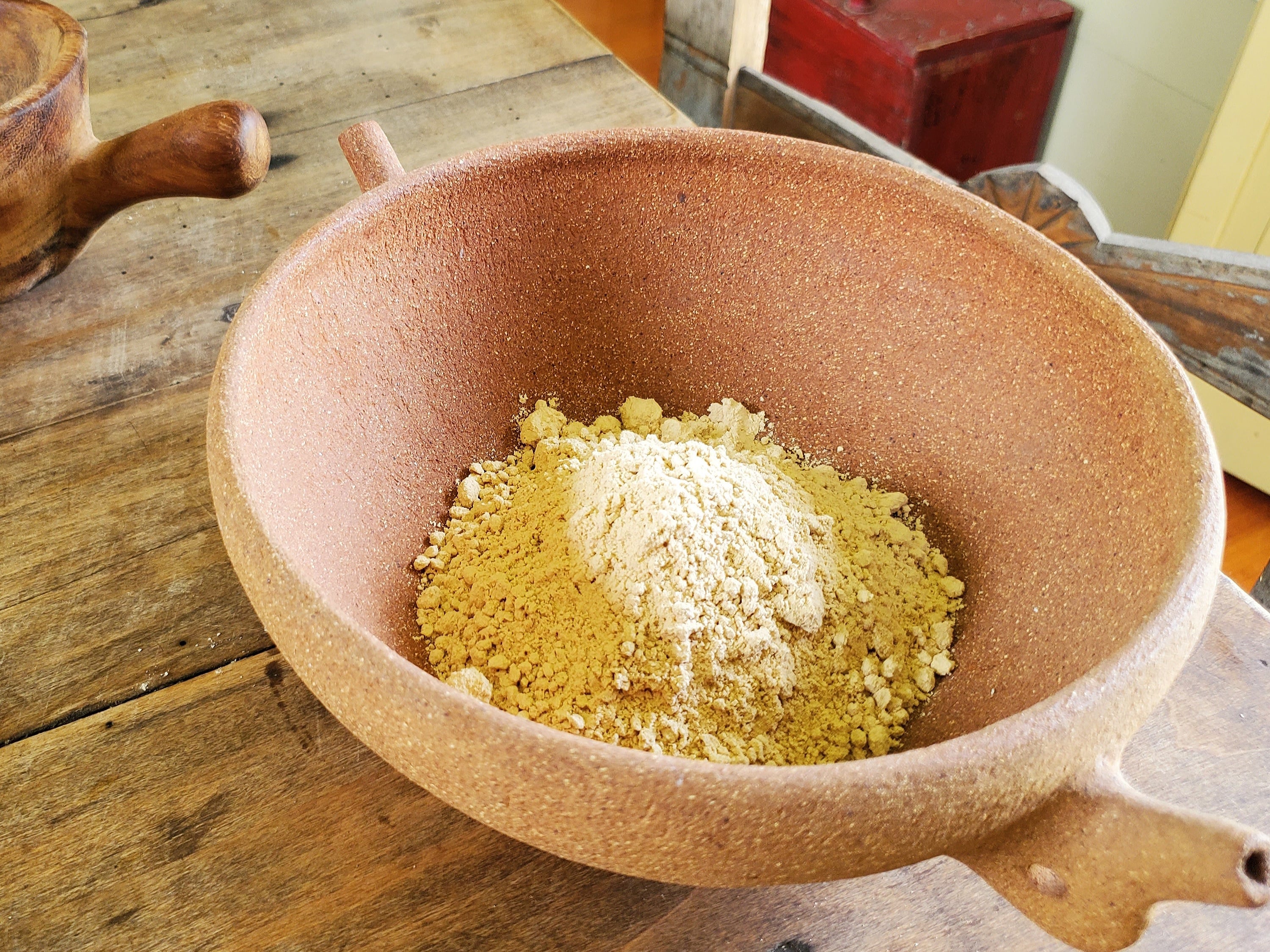
One item of particular interest is gofio (GOH-feeoh). Emblematic of Canarian cuisine, gofio is a type of flour made from toasted cereals or starchy vegetables, usually corn or wheat. It was first prepared by the Guanches who were the original inhabitants of the Canary Islands and relatives to the Berbers of North Africa. In St. Bernard Parish, just as in the Canary Islands, toasted cornmeal or flour is traditionally known as gofio. During the winter time, gofio was often served as a thick porridge and enjoyed by Isleño trappers in their camps.
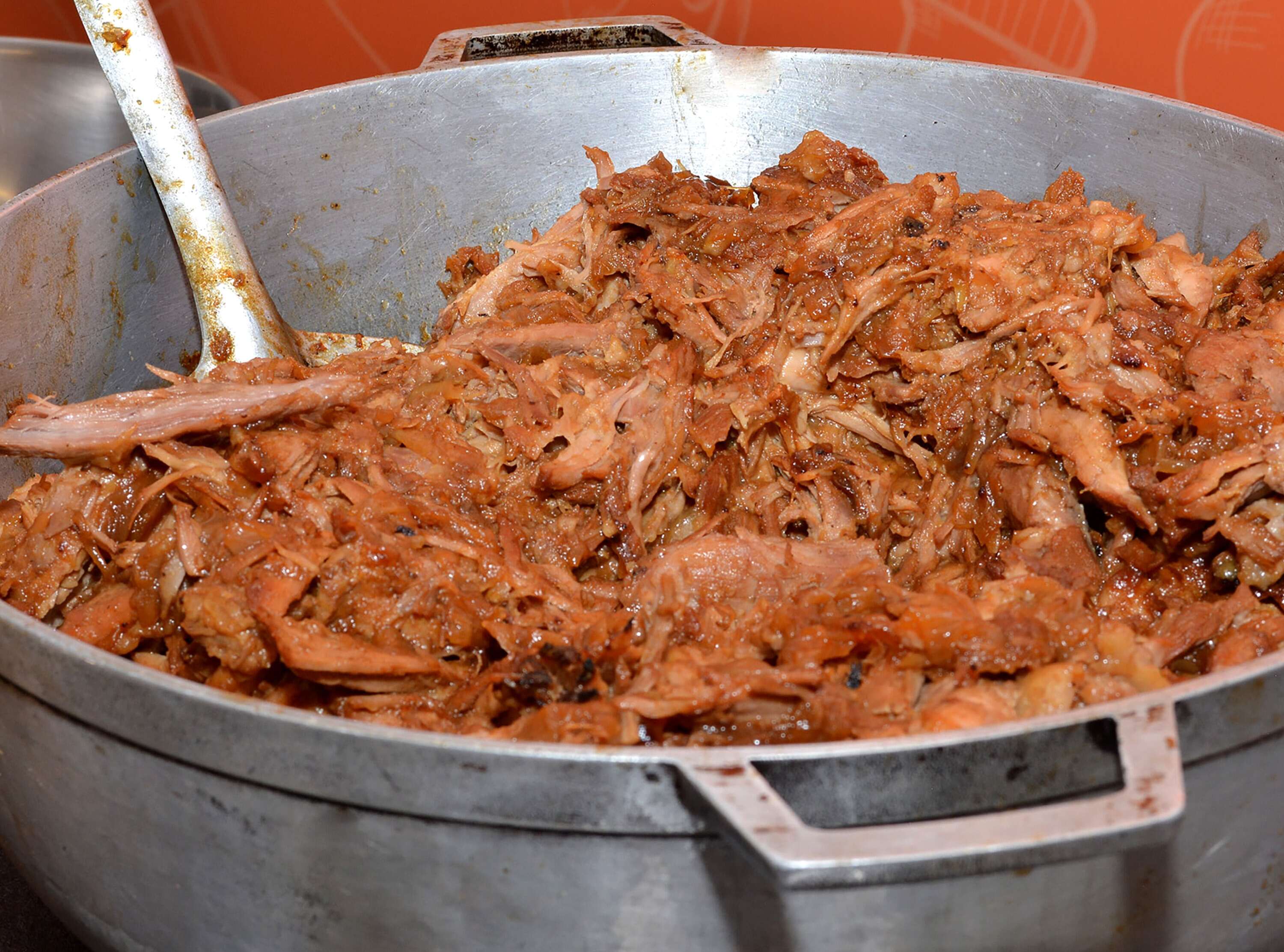
One favorite of the Isleño community is known as ropa vieja (ROH-pah βEEAY-hah, meaning ‘old clothes’). This dish can be found in many countries that saw significant immigration from the Canary Islands. For instance, the national dish of Cuba is also ropa vieja but in a style unique to the island. In St. Bernard Parish, ropa vieja is prepared from shredded pork, chickpeas, onion, tomatoes, parsley, and other ingredients. Traditionally, this dish was used to minimize waste by reusing leftovers from a previous meal. This version is notable because of its use of pork rather than beef or even goat which can be found in recipes from Cuba, Costa Rica, Panamá, and Venezuela. This being said, in the Canary Islands, the dish is customarily prepared with either beef or pork.
As is popular in fishing communities throughout the world, the Isleño community possesses its own variation of fish soup known as caldo de pescado (KAHL-doh DAY peh-KAH-oh). Recipes from the Canary Islands are prepared with a white fish, such as grouper, along with potatoes, tomatoes, onion, garlic, cilantro, parsley, olive oil, and other spices. This dish has been more or less maintained by Isleño cooks through the centuries. In Louisiana, redfish or red drum, known as colorado (koh-loh-RAHOW, meaning ‘red fish’), is generally used to make caldo de pescado. Additionally, cilantro is not generally included in this dish as well as some of the spices used in the Canaries.
By far one of the most popular dishes of the Isleños must be caldo (KAHL-doh, meaning ‘soup’). This dish finds its origins in the form of potaje brought by the original Canary Islander settlers over two centuries ago. Caldo is a hearty stew or soup of pork, white beans, potatoes, cabbage, corn, and other vegetables which is served over hot rice. It is typically prepared during the cooler, winter months although it is also a favorite dish at large gatherings and events. Many are very passionate about caldo just as others in Louisiana might have strong opions about gumbo. Every family has its own recipe with its own modifications, but no matter the preparation, every variation is simply delicious.
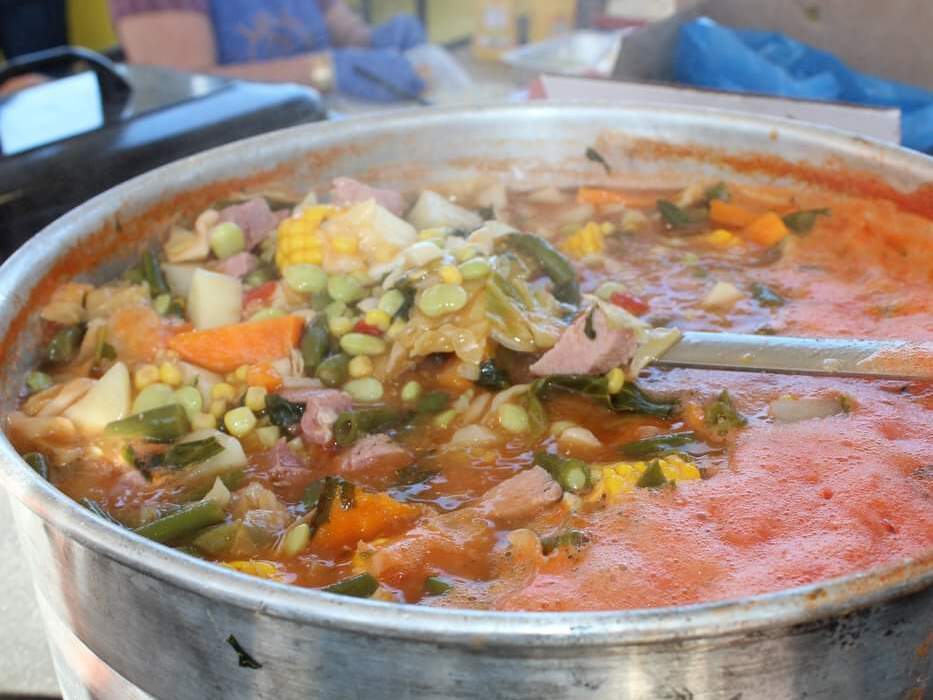
Try caldo for yourself! View our recipe.
Up until the American Civil War, Canarian wine could be found throughout the United States. It was generally considered a table wine during this period and large shipments regularly arrived in New Orleans. Undoubtly, many generations of Isleños consumed the same Canarian wine that their relatives continued to produce. Likewise, tafia, an alcohol made from sugarcane, was enjoyed by many Isleños and consumed throughout Louisiana during the eighteenth and early nineteenth centuries. In time, the Isleños would also come to create their own wines often with native fruit such as blackberries. Other forms of alcohol have been enjoyed by the community as well, namely rum which is also popular in the Canaries.
Following the American Civil War, many Isleños found themselves in fishing communities throughout eastern St. Bernard Parish. Families maintained their own gardens, but the majority of Isleños sought occupations such as fishing, trapping, hunting, and moss gathering.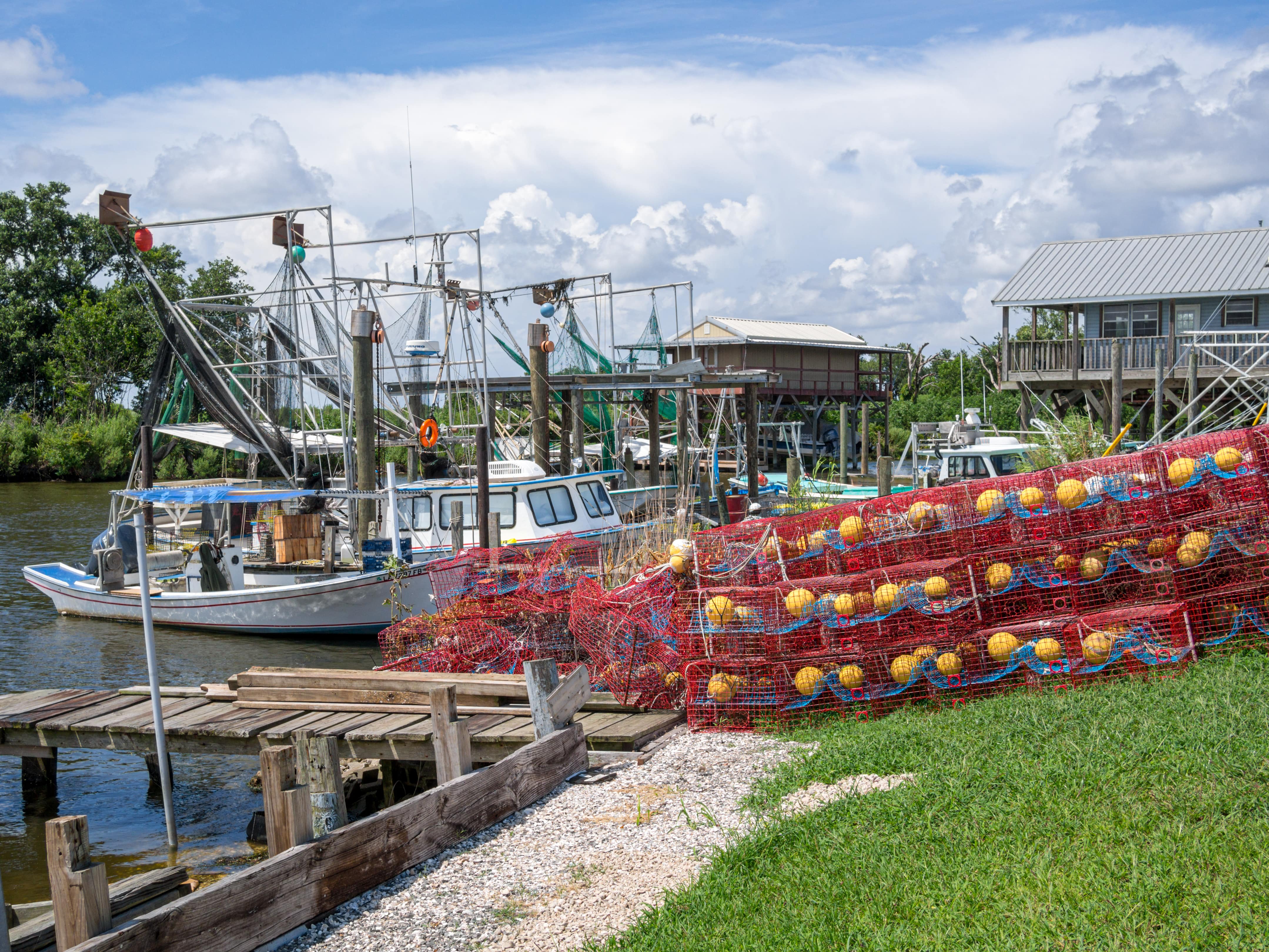 Seafood in particular became important to the Isleño diet and continues to hold importance today. Usually, colorado, trout, drum, and flounder were enjoyed by Isleños. These fish were prepared in many forms but most often in a large pot with many other ingredients or even cooked in a tomato sauce with diced potatoes and rice.
Crab fishermen, known as jaiberos, would spend long nights next to their viveros to separate recently molted crabs to be sold. Jaiba momia (HAYE-βah MOHM-eeah, meaning ‘soft-shell crab’) is highly sought after and is generally eaten whole after being battered and fried. Shrimp is prepared in a variety of ways but often boiled in a well-seasoned stock or served as an element in other dishes. Wild game such as duck was served regularly and in a multitude of ways, generally in a pot with many other vegetables, herbs, and spices.
Despite the relative isolation of the Isleños throughout their history, their proximity to the port city of New Orleans has always allowed for some measure of contact with other communities. Many Spanish-speaking immigrants from Spain and Latin America were drawn to St. Bernard Parish because of its thriving Isleño community. Particularly during the twentieth century, a number of Galicians, Catalans, Valencians, and Basques found their way to the Isleño fishing villages of eastern St. Bernard Parish. As a result, some Isleño families hold onto recipes for paella, fideuà, caldo gallego, the Spanish tortilla (a type of omlette), and other dishes. Elements of Louisiana Creole cuisine have also had a large impact on the Isleño community. For example, some Isleños have their own recipes for gombó (gohm-BOH, meaning ‘gumbo’) among other dishes. Ultimately, the interaction between the Canary Islander descendants and neighboring communities has allowed for the foodways of the Isleños to evolve over time while still maintaining its Canarian roots.
Many Isleño families continue to enjoy the recipes of their ancestors, primarily those listed above. The cuisine of the community is perhaps the most resilient to the persistent cultural erosion that has occured since the twentieth century. That being said, other recipes have already been lost to time or have fallen into disuse. Unlike other food traditions, Isleño cuisine has undergone almost no commercialization. That is to say, Isleño dishes such as gofio, ropa vieja, and others cannot be found in local restaurants.
Los Isleños Heritage and Cultural Society of St. Bernard has pushed to preserve the foodways and traditions of the Canary Islander descendants community by frequently preparing caldo or ropa vieja at events, meetings, and gatherings. Other dishes are also prepared by volunteers. At the Fiesta de los Isleños (Los Isleños Fiesta), some of these Canarian dishes are offered to the public as well as dishes originating to the Spanish mainland. The unique climate and geographical position of St. Bernard Parish means that some ingredients used in traditional Canarian cuisine are just not available or far too expensive to be served at an event. At the same time, Canarian wine and spirits extremely difficult to acquire in the State of Louisiana. In general, the food and drink originating to the mainland of Spain is far more accessible. Nevertheless, Los Isleños Heritage and Cultural Society continues to promote the traditions of the Isleño community as well as provide typical Canarian cuisine given these restrictions.
Los Isleños Heritage and Cultural Society of St. Bernard. (2012). Los Isleños Cookbook: Recipes from Spanish Louisiana (Benge, D. L., & Sullivan, L. M., Eds.). Gretna, LA: Pelican Publishing Company.