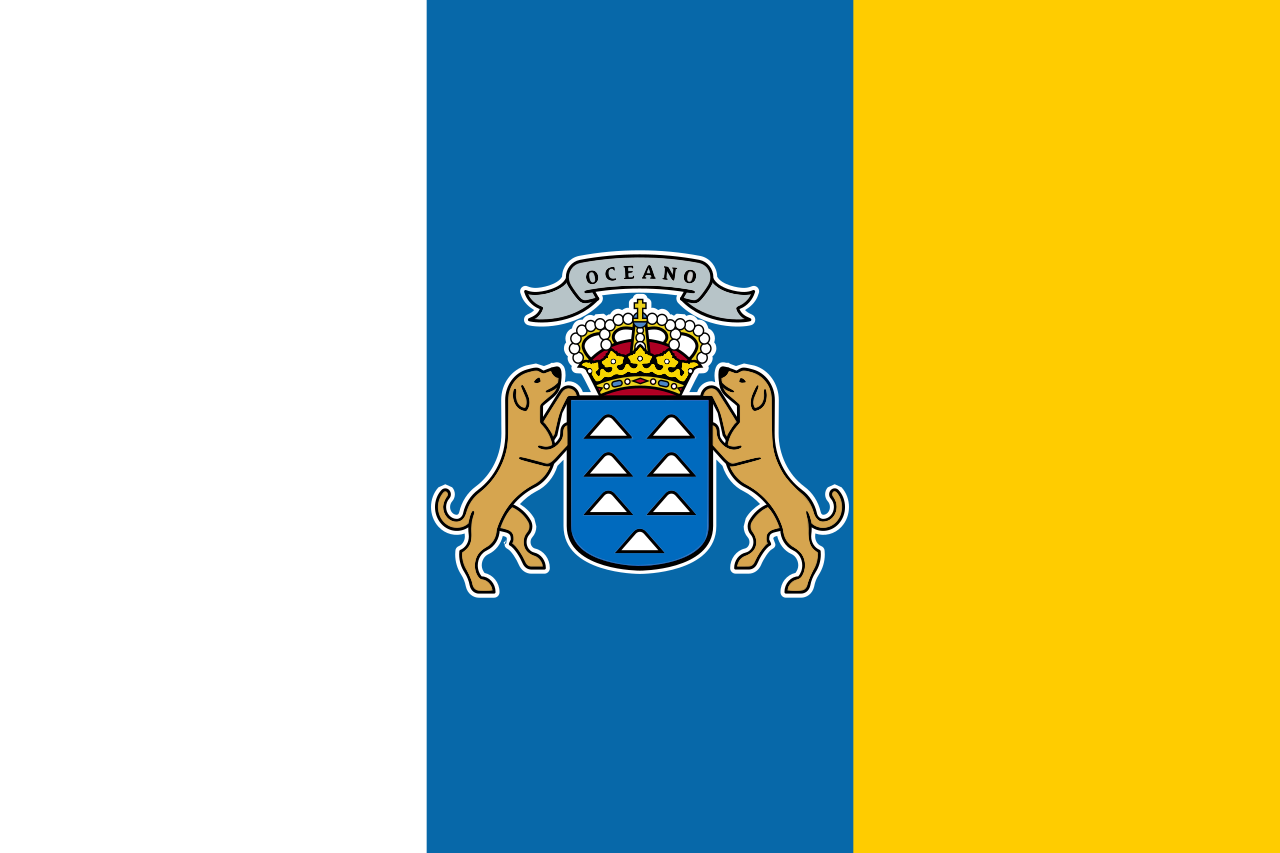
Please note, this page is a work in progress. Future updates will be coming shortly to more accurately describe the Isleño Spanish dialect.
The Isleño Spanish dialect is spoken by the descendants of the original Canary Islanders who arrived in what would become St. Bernard Parish during the late eighteenth century. While remaining recognizably Canarian in origin, the dialect has been influenced through contact with speakers of English, Louisiana French, and Louisiana Creole (Kouri-Vini) as well as Spanish-speaking immigrants from the Iberian Peninsula and the Caribbean.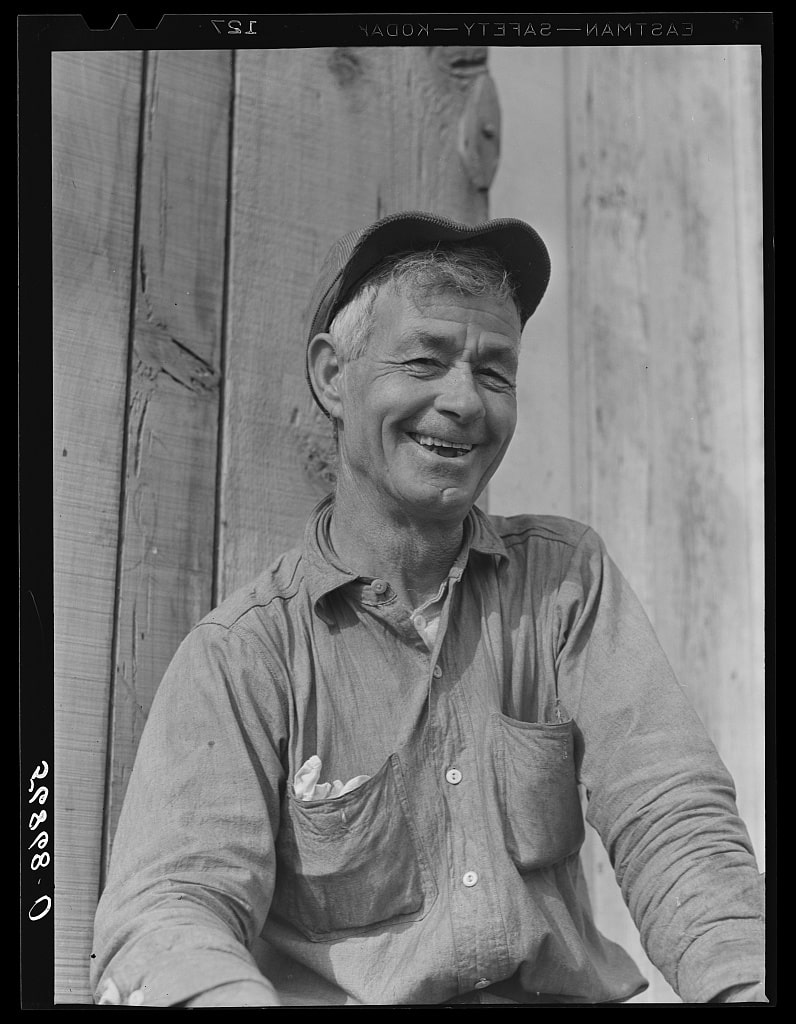
Since as early as the turn of the twentieth century, the Isleño way of life has been in jeopardy. Following World War I and II, improved access to eastern St. Bernard Parish, greater urbanization along the Mississippi River, and a monolingual English educational system ultimately disrupted the transmission of Isleño Spanish and other customs. Many Isleños during this period sought work outside their traditional communities and began to use English with their children. At the same time, increased coastal erosion and repeated, devastating natural disasters forced many Isleños to leave their homes.
Despite this, Spanish is still the first language of many elderly Isleño community members from eastern St. Bernard Parish, but the language is considered highly endangered. Many more Isleños are semi-speakers or passive bilinguals of the dialect. Efforts are being made to promote and revitalize the language through bilingual signage at Los Isleños Museum and Historic Village as well as through other initiatives. In over two centuries since the arrival of Canary Islanders in Louisiana, Isleño Spanish remains a living language today.
The following descriptions are intended for educational purposes and the revitalization of the Isleño Spanish language only. A standard form of the Isleño Spanish language is presented which may not reflect all variations in the language. Careful consideration is taken for current linguistic trends due to language death. Please see Objective I of the Restated and Amended By-Laws of Los Isleños Heritage and Cultural Society of St. Bernard.
The phonology and phonetics of Isleño Spanish are similar to most dialects of Spanish apart from some key distinctions. Elements of note are discussed below:
| Spanish Vowel | Isleño Spanish Word | English Translation | Approximate English Equivalent |
|---|---|---|---|
| A | casa | house | A in ‘father’ |
| E | mesa | table | A in ‘face’ |
| I | niño | boy | EE in ‘tree’ |
| O | otro | other | O in ‘go’ |
| U | mucho | many | OO in ‘food’ |
| Spanish Diphthong | Isleño Spanish Word | English Translation | Approximate English Equivalent |
|---|---|---|---|
| AI, AY | baile; hay | dance; there is/are | I in ‘item’ |
| AU | jaula | cage | A in ‘face’ |
| EI, EY | seis; rey | six; king | I in ‘item’ 1 |
| EU | Europa | Europe | AYW in ‘wayward’ |
| UA | cuando | when | WA in ‘want’ |
| UE | bueno | good | WA in ‘way’ |
| UI | guirre | vulture | WEE in ‘week’ |
| UO | cuota | fee | WO in ‘woke’ |
| IA | vía | route, track | YA in ‘yard’ |
| IE | biera | beer | YE in ‘yes’ |
| IO | Dios | God | YO in ‘yore’ |
| IU | ciudad | city | Same as ‘you’ |
| OI, OY | coincidencia; hoy | coincidence; today | OY in ‘toy’ |
| Spanish Consonant | Isleño Spanish Word | English Translation | Approximate English Equivalent |
|---|---|---|---|
| B | bicho; jaiba | bug; blue crab | B in ‘baby’ or No equivalent 2 |
| C | cochino | pig, hog | K in ‘kid’ |
| CH | chico | small, kid | CH in ‘chair’ |
| D | dir | to go | D in ‘dog’ 3 |
| F | fango | mud, muck | F in ‘leaf’ |
| G | gato | cat | G in ‘gate’ or No Equivalent 4 |
| H | hola | hello | Silent or H in ‘home’ 5 |
| J | jugo | juice | H in ‘home’ |
| L | lacre | lake | Similar to L in ‘late’ 6 |
| LL | llave | key | LL in ‘million’ 7 |
| M | mesmo | same | M in ‘me’ |
| N | noche | night | N in ‘need’ |
| Ñ | liña | fishing line, string | NY in ‘canyon’ |
| P | papa | potato | P in ‘lip’ |
| Q | quejo | jaw | K in ‘key’ |
| R | caro | expensive | TT in ‘butter’ 8 |
| RR | arriba | above | No equivalent 8 |
| S | sato | racoon | S in ‘soup’ 9 |
| T | tanta | aunt | Similar to T in ‘eat’ 10 |
| V | vamos | we go | B in ‘baby’ or No equivalent 2 |
| X | examen | exam | X in ‘extra’ |
| Y | ayer | yesterday | No equivalent 11 |
| Z | azúcar | sugar | S in ‘soup’ 9 |
| K, SH, W | Shell Beach; whisky | Shell Beach, whiskey | SH in ‘sheep’ and W in ‘whale’ 12 |
Generally, Isleño Spanish follows many of the grammatical constructions followed by Canarian Spanish and dialects of the Americas. Any items of note will be examined in this section.
Just as in other dialects of Spanish, nouns have a gramatical gender and can be singular or plural. A masculine noun is marked by -o and -ón while a feminine noun is represented by -a . Other endings to feminine nouns are -ona, -ción, -sión, -dad, -tad, and -tud. The endings -ista and -ente can be masculine or feminine depending on the context. Other endings such as -e can be masculine or feminine. In order to make a noun plural, simply add -s or -es onto the end of a noun. There are some irregular Spanish nouns that do not follow these rules.
There are a handful of nouns which have a different grammatical gender in Isleño Spanish when compared to other dialects. These nouns can be found in the list below. It has been suggested that these differences are due to the influence of Portuguese on Canarian Spanish (Lipski, 1990).
The subject pronouns used in Isleño Spanish are the following: yo (I), tú (you [informal]), usted (you [formal]), él (he), ella (she), nosotros/nosotras (we), ellos/ellas (they), and ustedes (y’all). The pronoun vosotros does not exist in Isleño Spanish. The form ellos is used to decribe a subject that is all masculine (i.e. a group of men) or masculine and feminine (i.e. a group boys and girls). Meanwhile, the form ellas is used to decribe a subject that is only feminine. This same patern is used for nosotros/nosotras. One notable characteristic of Isleño Spanish is that it generally preserves subject pronouns in a sentence in order to avoid confusion. This is not always done though. Please reference the examples below for the use of subject pronouns:
Speakers use the “standard” direct and indirect object pronouns in all forms of speech. The direct object pronouns can be found below tih examples of their use:
Additionally the indirect object pronouns include:
Like all other dialects of Spanish, the construction of sentences follows the order SVO, meaning subject-verb-object. This is the same word order used in English. Examine the following sentence in Isleño Spanish: José come el gofio (‘José eats the gofio’).
A more unique element to Isleño Spanish is the use of non-inverted questions. For example, an Isleño will say ¿Qué tú haces? (‘What are you doing?’), rather than ¿Qué haces tú? which is done in other dialects of Spanish. This feature is popular around the Caribbean and is not uncommon with elderly speakers from the Canaries (Lipski, 2004).
Isleño Spanish follows the conventions of nearly all dialects of Spanish in terms of its verbs. Verbs are generally divided into -ar, -er, and -ir verbs with verb forms being conjugated to describe particular subjects. The various iregular and stem-changing verbs which are present in other dialects of Spanish are present in Isleño Spanish. Any important differences are discussed in this section.
Perhaps one of the most notable differences between Isleño Spanish and other dialects is the verb dir meaning ‘to go’. Many other dialects use the form ir but dir can be found in other regions of the world, namely on the Canary Islands and in the northwest of Spain. This verb is largely conjugated the same as in other dialects apart from the imperfect tense: día, días, día, díamos, and dían. Other distinctions include the present subjunctive forms (vaiga, vaigas, vaigan, vaigamos, and vaigan) as well as where imperative forms match subjunctive forms.
A handful of verb conjugations in Isleño Spanish also differ from other dialects. The exceptions include the following:
Just as with any dialect, Isleño Spanish possesses a unique vocabulary which distinguishes itself. The language preserves various acharisms as well as terms originating to the Canary Islands. Different loanwords have also entered the Isleño Spanish lexicon from Louisiana French and Louisiana Creole, English, and Spanish dialects from the Carribean.
This glossary is the result of countless hours of interviews with speakers of Isleño Spanish coupled with the recollections and suggestions of Isleño community leaders. These findings have been subsequently supported by the works of academics such as Manuel Alvar, Samuel G. Armistead, Patricia M. Lestrade, John M. Lipski, Raymond R. MacCurdy, and others. The following descriptions are intended for educational purposes only with the goal of providing fellow Isleño community members the tools to perserve their language.
Alvar López, M. (1998). El dialecto canario de Luisiana. Las Palmas de Gran Canaria, Spain: Servicio de Publicaciones de la Universidad de Las Palmas de Gran Canaria.
Armistead, S. G. (1992). The Spanish Tradition in Louisiana: I Isleño Folkliterature. Musical transcriptions by Isreal J. Katz. Newark, DE: Juan de la Cuesta.
Lestrade, P. M. (1999). Trajectories in Isleño Spanish with Special Emphasis on the Lexicon [Doctoral dissertation, University of Alabama].
Lipski, J. M. (1990). The Language of the Isleños: Vestigial Spanish in Louisiana. Baton Rouge: Louisiana State University Press.
Lipski, J. M. (2004). El español de América (3rd ed.). (S. Iglesias Recuero, Trans.). London, U.K.: Longman Group Limited.
MacCurdy, R. R. (1950). The Spanish Dialect in St. Bernard Parish, Louisiana. Albuquerque, NM: The University of New Mexico Press.