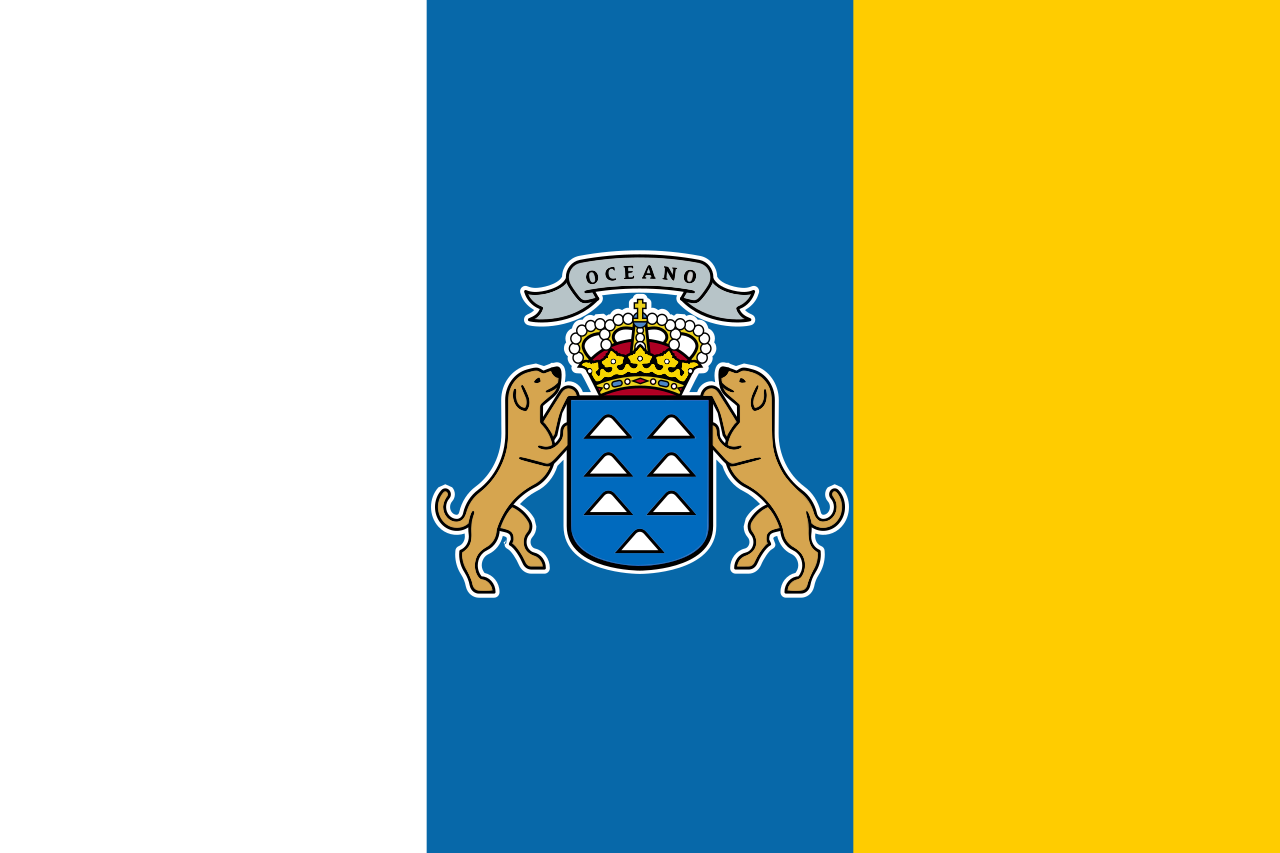
From an early age it was traditional for Isleño children to be taught how to sing and dance by their close family members. Singing was lent particular importance in the Isleño community and had historically served an important social function. Notably, the musical tradition of the Isleños brought the Isleño community substantial attention from around the world. Some of the most widely-known Isleños were talented musicians during their lives.
The music of the Canary Islands is characteristic for its Iberian and Guanche origins which have seen influence from Latin America and Europe. Through the centuries, a particular style of music was developed with its accompanying instruments and dances. Additionally, individual islands have their own musical traditions which are characteristic of the island and nor shared elsewhere.
One of the most characteristic items of Canarian music is the timple (TEEM-play) which is a five-stringed instrument in the form of a small guitar or ukulele. Other popular stringed instruments include the bandurria (bahn-DOO-reeah), laúd (lah-OOD), and Spanish guitar. Variations of reed flutes exist on different islands, generally referred to as flautas de pico (FLAOW-tahh DAY PEE-koh). Large sea shells are also employed as a type of horn known as a bucio (BOO-seeoh). This instrument is of Guanche origin in particular.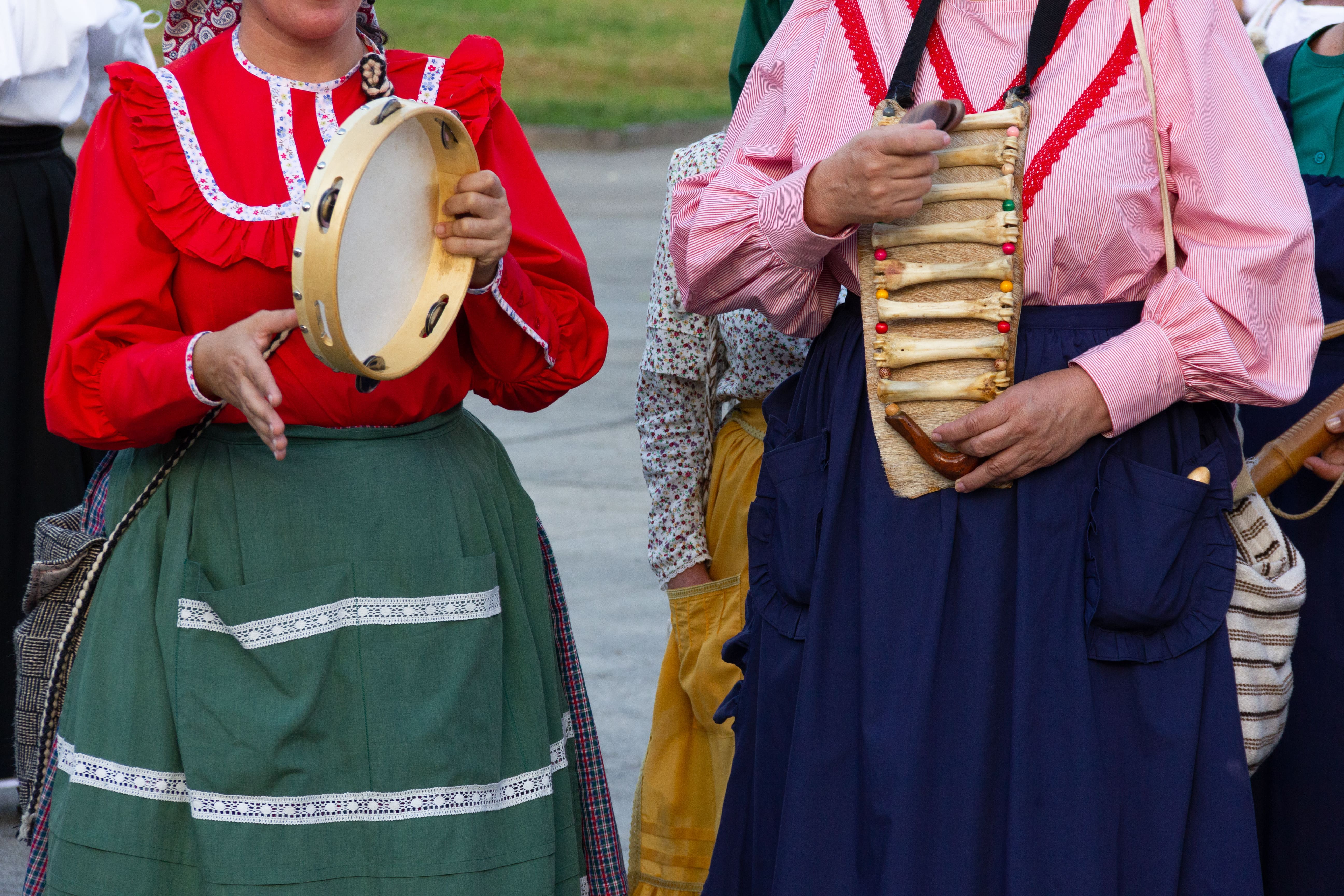
A range of percussion instruments exist throughout the Canaries with drums and tambourines being the most widespread. Types of castanets are traditional to the music of the Canary Islands and are known as chácaras (CHA-kah-rahh) or castañetas (kahh-tah-NYEH-tahh). Pairs of limpet shells, known as lapas (LAH-pahh), are also used to make a similar instrument. Moreover, the bones of a goat are put together to make a form of “washboard” instrument known as a huesera (whey-SAY-rah). On the Spanish mainland, this instrument is sometimes called an arrabel or ginebra. The espada (ayehh-PAH-thah) is another inventive instrument composed of a metal bar, in the rough shape of a sword, which is hit with another smaller bar or rod.
More recently, the return of Canary Islander descendants from Latin America has influenced the folkloric music of the archipelago. For example, the cuatro (QUAH-troh), a four-stringed instrument of similar size to the timple, has seen some popularity. This instrument was likely brought by Venezuelan immigrants to the Canaries, but it can also be found in Cuba and Puerto Rico. Additionally, the claves (KLAH-βayehh) have been adopted into various folkloric traditions. Claves are a pair of wooden rods which are struck together to make a sharp noise. This instrument is typical of Cuban musical tradition and has its origins in West Africa. Within the last couple centuries, the violin has also been introduced to Canaries from Europe.
Just as there are wide variety of instruments used on the Canary Islands, there exists an equally diverse range of dances with accompanying music. Two of the most characteristic dances of the Canaries are the folía (foh-LEEAH) and isa (EE-sah). Several dances continue to be carried on from the Guanches as well as others originate to the Iberian Peninsula and the rest of Europe.
The folía is a slow and methodical dance which is accompanied by a similarly-paced rhythm played on stringed instruments, most often the timple and guitar. Dancers generally form a circular shape but can also form pairs or groups of four. On the other hand, the isa is a fast-paced and complex dance which is joined by the guitar, timple, laúd and bandurria. Other percussion instruments can be incorporated into the isa such as the huesera. Both of these dances are practiced widely throughout the Canary Islands with each island having its own particular style. Some dances are specific to certain parts of the Canaries. For example, the santodomingo (sahn-toh-doh-MIN-goh) can be found on La Palma, La Gomera, Tenerife, and Gran Canaria. Generally, dancers form a circle or square during the performance which is accentuated with spins and transitions. A soloist sings much of the composition with a chorus joining in periodically.
Many traditions from the Guanches have remained popular throughout the archipelago. The most widely known is the tarajaste (tah-rah-HAHH-taye) which is popular on Tenerife and La Gomera. The dance is performed to the beat of a drum along with chácaras and other instruments. Also of native origin is the sirinoque (see-ree-NOH-kaye) which comes from La Palma. This dance is noted for its use of kicks and foot taps with couples facing each other in a line. Typically, the dance is accompanied by a drum beat along with chácaras, and reed flutes. The music is interrupted for dancers to improvise a witty attacks on their opponents.
Equally popular are the music and dances which can be traced to the Iberian Peninsula as well as Europe. The malagueña (mah-lah-GEN-yah) is a typical dance of the Canary Islands which is related to the forms of fandango which can be found in the south of Spain. In fact, the folía has Galician-Portuguese origins before it was influenced by the traditions of southern Spain. Many variations of the seguidilla (say-gee-DEE-yah) are traditional to the music of the Canaries. This form of music and dance first developed in the central and northern portions of Spain during the fifteenth century. More recent influence from Europe has led to the adoption of polcas (polkas) and mazurcas (mazurkas) into Canarian folkloric tradition.
In Louisiana, the folkloric traditions of the Isleño community evolved through the centuries and were influenced by trends in Latin America as well as North America in particular. The comparatively small size of the community paired with the struggle for basic survival has shaped the music and dance of the Isleños.
By far the most popular and emblematic musical tradition of the Isleño community is the décima (DEH-see-mah). Popular throughout the Spanish-speaking world, décimas are a form of poetry composed of an introductory four-line stanza followed by four ten-line stanzas. The lines within these stanzas are octosyllabic and follow a set rhyming scheme, most commonly ABBA-AC-CDDC (Armistead, 1992).
After the arrival of the Canary Islanders in Louisiana, the décima began to evolve into more loose forms with lines that tend to be octosyllabic but not exclusively. The rhyming scheme can also differ between décimas. The key defining feature of a décima isleña is not its form per say, but its subject matter. Singers, known as decimeros, typically focus on the following topics: (1) life in eastern St. Bernard Parish, (2) larger-than-life stories of community members, (3) events of importance, and (4) humorous or ironic tales (Armistead, 1992).
A somewhat representive décima of the Isleños would be “El mosco y el agua alta” which was often recited in the community of La Isla (Delacroix). A documentary about the Louisiana décima and the Isleño community was produced in 1983 and entitled Mosquitos and High Water. This song were performed by Martín Alfonso in 1976 and recorded by Samuel Armistead. The original transcription and translation have been adjusted slightly for clarity:
| “El mosco y el agua alta” | “Mosquitos and High Water” | |
|---|---|---|
| Esto sí que son trabajo’, Esto sí que son fatiga’, que pasa un pobre tampero pa’ mantener la familia. |
This sure is hard work, these sure are hard times, that a poor trapper must go through just to feed his family. |
|
| Ha’l’contra’o el trampero esta, el mosco y el agua alta, y para cumpletá’, de la banca le mandan carta’. |
The trapper having found out there’s mosquitos and high water, and, to top it all off, they’re writting him from the bank. |
|
| Cuando yo llegue a casa, así me dijo Cecilia, —Parde, aquí tiene una carta que le mandan de la Villa. |
When I got back home, Cecilia said to me, —Dad, here’s a letter that came from New Orleans. |
|
| Y como yo no sé leé, en las manos se la di, —Hija, leéme esta carta, y dime lo que quié’ decí’. |
And since I don’t know how to read, I put it in her hands, —Child, read me this letter, and tell me what it says. |
|
| Ella s’entretuvo un poco en decirme lo que había. Vuelvo la vista par’ella, y las lágrimas se bebía. |
She took a little time to tell me what it said, and when I looked at her, she was swallowing her tears. |
|
| —¿Qué tiene’, hija, que llora’, que tanto me desespera’? —Parde, le mandan a decí’ que pague la nota entera. |
—What’s wrong? Why are you crying? Why are you giving me such grief? —Dad, they’re asking you to pay your debt in full. |
|
| Vinieron to’ los niños, y nos ‘garramos de mano’, —Parde, ¿cómo nos haremo’ cuando venga este verano? |
All the children gathered ‘round, and we took each other’s hands. —Dad, what’re we gonna do when summer comes around? |
|
| Ahí viene la más chica, la que llamamos «La Niña». —Pues ser que Chanillo nos dé porque estamos en la familia. |
There comes my youngest child, the one we call “The Little Girl”. —Maybe Chanillo will help us since we’re all in the family. |
Traditionally, décimas were sung in rondallas, or ‘rounds’, with individual members improvising elements. At different times the style and lyrics of particular décimas would change depending on the person singing. During the second half of the twentieth century, it also became more common for lone decimeros to continue the tradition. Some of the last community members who upheld this practice during the late twentieth included Martín Alfonso, Joseph “Chelito” Campo, Herbert Díaz, Irván “Puco” Pérez, John “Johnny” Robin, and others.
Despite the popularity of the décima, many other songs have been traditionally popular in the Isleño community, namely the romance (roh-MAHN-say). A romance is best understood as a Spanish ballad which is often narrative and touches on the larger issues of life. These songs have a diverse range of origins and are spread widely throughout the Spanish-speaking world.
One of these romance tells of the tale of Joseph and Mary traveling to Bethlehem with their young child Jesus when they come across a blind man caring for orange trees (Armistead, 1992). Mary asks the man if they can pick oranges for their child. Upon picking the oranges, even more appear and the man regains his sight. This romance appears to have been combined with with another which retells the crucifixion of Jesus Christ (Armistead, 1992). Both romances are propular in the Canary Islands, Iberian Peninsula, and some portions of Latin America (Armistead, 1992). These romances were sung by Julia “Sha” (Melerine) Schiel in 1980 and recorded by Samuel Armistead. The original transcription and translation have been adjusted slightly for clarity:
| “La fe del ciego” + “La Virgen camino al Calvario” |
“The Miracle of the Blind Man” + “The Virgin Goes to Calvary” |
|
|---|---|---|
Ahí arriba en aquel alto, venden ricos naranjeros. Ciego es el que los vende. Ciego es el que no ve. —Ciego, déme una naranja para mi niño comer. —Entra adentro, la señora y coja las que quisiere. Una cogió para mi niño comer y cientas volvieron a nacer. Camina la Virgen pura, y camino para Belén, con su niño entre los brazos. qu’es el Jesús de Nasarén. Cuando ella día llegando, ya lo etaban crucificando. Cuando ella llegó. ya le habían remachado los clavos. |
Way up on that hill, they sell delicious oranges. The man who sells them is blind. A blind man who cannot see. —Blind man, give me an orange for my child to eat. —Come in, my lady and take all you want. When one was given to the child hundreds came forth. The Virgin is traveling, traveling to Bethlehem, with her child in her arms. who is Jesus of Nazareth. As she is arriving, they were crucifying him. When she had arrived. they had nailed him to the cross. |
Another form of music is the copla (KOH-plah) which is one of the oldest forms of Spanish poetry. It is composed of four-line stanzas and can be found all throughout the Spanish-speaking world. Due to this, it is difficult to determine the exact origins of different songs with some possibly being conserved from the Canary Islands but most can be found in Spain and Latin America in general (Armistead, 1992).
One of the “oldest” coplas that has been documented in the Isleño community was also sung by Julia “Sha” (Melerine) Schiel and has origins in the Middle Ages (Armistead, 1992). The original translation has been adjusted slightly for clarity:
| Me dijiste que venidas... que venidas y no vienes. |
You said that you were coming... you were coming but you haven’t come. |
|
| ¡Ay, qué pijonina será que entretenido te tiene! Pero eso es por haber tenido... y eso es por haber ama’o, y eso es por haber tenido amores con un casa’o. |
What sort of roguish girl is taking up your time! It’s all because you had... and it’s all because you loved, and it’s all because you had love with a married man. |
One of the earliest examples related to this copla was recorded in a 1507 version of La Celestina by Fernando de Rojas (Armistead, 1992). Through the centuries, this copla has spread throughout much of the Spain, Portugal, and even to Argentina (Armistead, 1992).
Regardless of the relative isolation of the Isleño community in eastern St. Bernard Parish, different communities of the region have been instrumental in the development of the Isleño identity. Consistently, the cultural impact of Acadian, African, and French communities on the Canary Islander descendants has been immense. This has been paired with substantial immigration from Spain and Latin America, particularly during the twentieth century. All of these communities brought their own distinctive music. On another note, the popularity of Spanish-language radio in the Isleño community during the same time has also had a sustainable influence. Generally, Isleños were able to tune into radio stations from México and Cuba but could listen to more distant broadcasts when fishing in the Gulf of Mexico. All of this cannot be ignored when discussing the Isleño musical tradition of St. Bernard Parish.
Isleño romances possess diverse origins which exemplify the various influences on the community. For example, romances such as “La vuelta del marido” are rooted in traditions from the American Southwest, México, and Central America while others such as “Delgadina” are directly related to versions found in the Caribbean (Armistead, 1992). It has been suggested recent Spanish immigrants from Andalusia have brought other romances such as “La hija de Juan Simón” (Armistead, 1992).
Even a small number Mexican corridos have been adopted and adapted into Isleño musical repertoire. In fact, the narrative construction and unique style of the Mexican corridos have directly influenced the evolution of the décima (Armistead, 1992).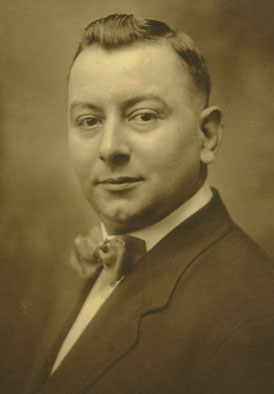 These findings have subsequently been supported by later research into the tradition (Buckingham, 2019). Also of note is the influence of Louisiana French musical tradition on the décima. This is most evident in “El trabajo del welfare” which is set to the form a typical French folk song (Armistead, 1992).
During the early twentieth century, the development of jazz in African-American communities of New Orleans gave rise to a lasting musical tradition. Even today, the popularity of New Orleans’ jazz clubs is a testament to its continued cultural significance. The proximity of St. Bernard Parish to New Orleans allowed many Isleños to enjoy live jazz performances with relative ease. During this period, the Alcide Núñez, better known as Yellow Núñez, became widely popular as a pioneering jazz clarinetist. He was also one of the original members of Stein's Dixie Jass Band which became known as the Original Dixieland Jazz Band (ODJB).
The displacement of the tradition Isleño communities due to natural disasters coupled with the steady assimilation of the community following World War II, the once thriving musical Isleño tradition is in jeopardy. This was capitalized with the death of Irván “Puco” Pérez in 2008, the last of the famous decimeros, which signaled to many the end of the living décima tradition of St. Bernard Parish. The loss of Spanish as a primary language of the community has dealt a serious blow to the tradition. That being said, elderly Isleños in particular remember the songs of their community.
Today, Los Isleños Heritage and Cultural Society of St. Bernard arranges for the arrival and accommodation of folkloric groups from the Canary Islands as a means to preserve and promote the traditions of the Canary Islands. These folkloric groups perform at the Fiesta de los Isleños (Los Isleños Fiesta) and dazzle crowds with their isas and folías as well as their traditional dress known as traje típico. It is this traditional music and dance which allows the Isleño and Canary Islander communities to once again be reunited as one people.
Armistead, S. G. (1992). The Spanish Tradition in Louisiana: I Isleño Folkliterature. Musical transcriptions by Isreal J. Katz. Newark, DE: Juan de la Cuesta.
Buckingham, W. D. (2019). Recollecting Isleño Décimas: Louisiana’s Lost Tradition of Spanish Ballad [Doctoral dissertation, University of Chicago]. Knowledge@UChicago. doi:10.6082/uchicago.1394.
Din, G. C. (1999). The Canary Islanders of Louisiana. Baton Rouge, LA: Louisiana State University Press.